







What Do You Need for a Complete Home Golf Studio Setup?

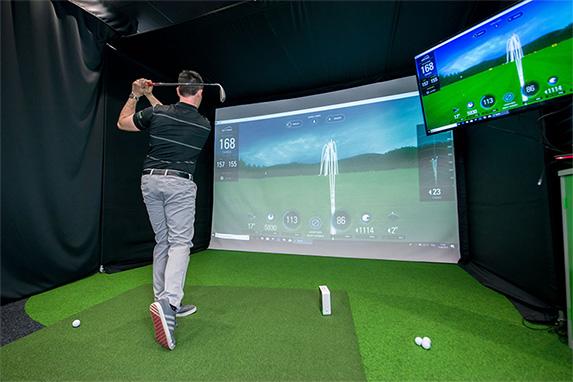
Creating your own personal home golf studio might sound daunting and difficult, but it’s incredibly achievable. If you’re a golf enthusiast looking to create a year-round practice facility for yourself, where you can perfect your swing without leaving home, a golf simulator setup gives you everything you need. It does, however, require an understanding of the most essential components.
A home golf studio represents a substantial investment in space, technology and equipment. Getting the specifications right from the outset reduces the risk of costly and cumbersome modifications later on, and ensures you get the most out of your system immediately.
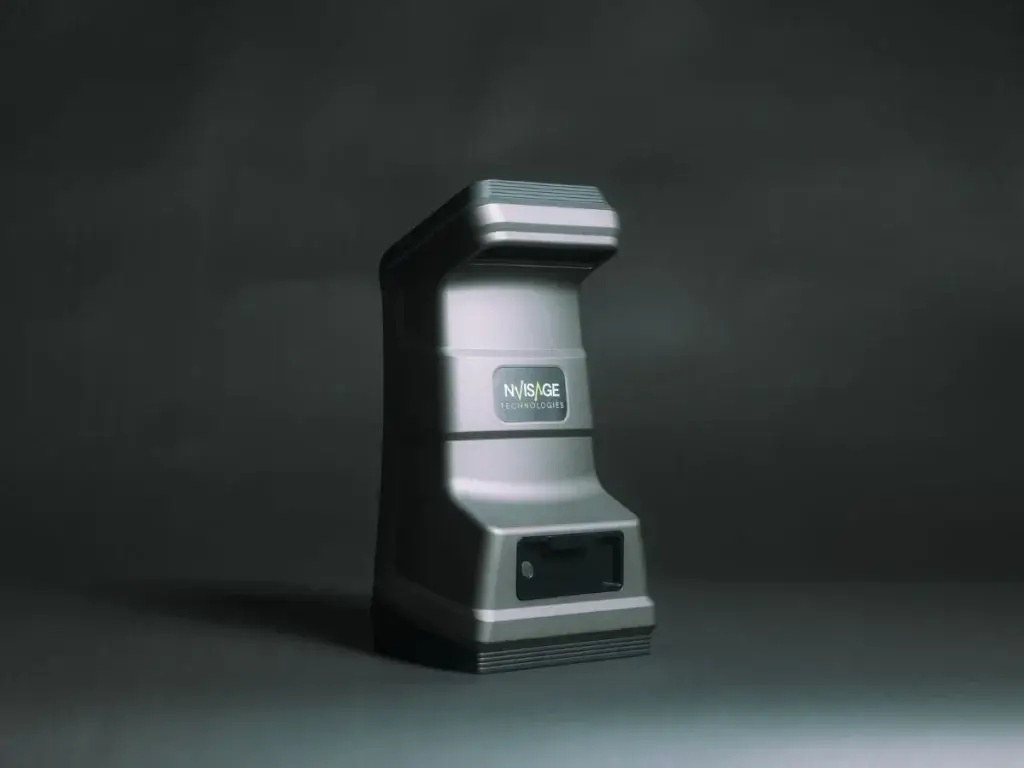
Launch Monitor Systems
At the heart of any serious golf simulator lies the launch monitor, the technology that captures ball flight data and translates your swing into accurate, actionable feedback. The golf simulator launch monitor essentially determines the quality and reliability of every practice session.
Modern launch monitor systems fall into two main categories: radar-based and camera-based systems. For more information about this type of technology, refer to our detailed guide on how simulator radar and camera systems work and overlap.
Fundamentally, when building your own simulator studio, consider your primary use case:
- Camera systems typically perform better in lower ceiling heights, such as basements or garages.
- Radar systems may be best suited for garden rooms or purpose-built structures with more liberal dimensions.
Luckily, many launch monitors incorporate both technologies, making them suit almost any application.
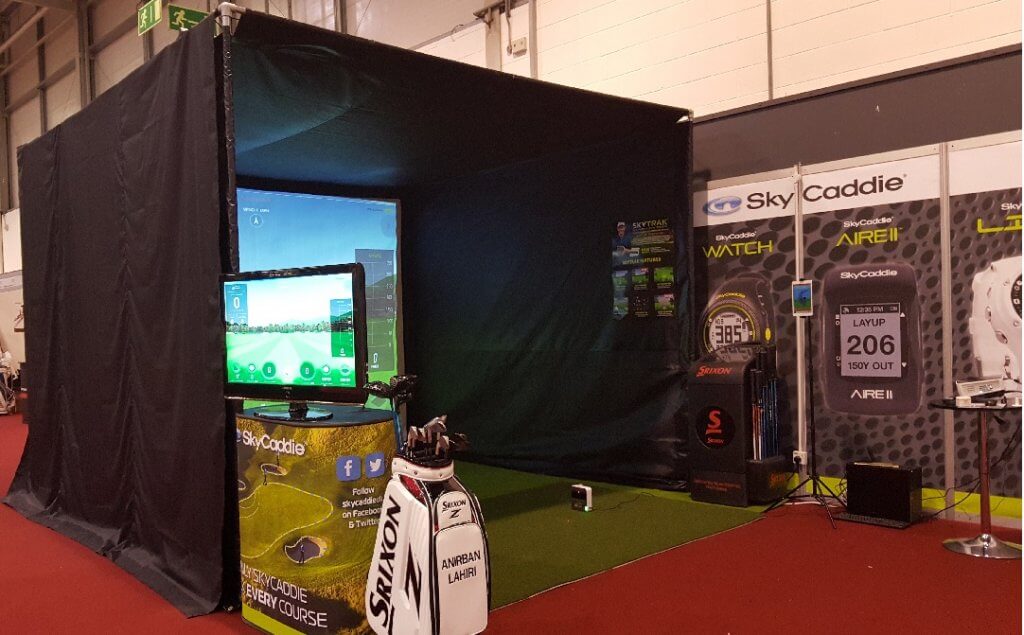
Simulator Enclosures
Once you’ve selected your launch monitor, you need to contain the playing area properly. A simulator enclosure serves multiple functions. It provides:
- A specific hitting area
- Protects surrounding walls and furnishings from errant shots
- Immerses the player fully into the game rather than what’s around them
Professional-grade enclosures incorporate impact-absorbing materials on all surfaces within the swing zone. This can also be complemented with a resistant golf net, particularly if space allows.
The enclosure ensures that you can complete a full swing each time, freely, and without worrying about mishits striking hard surfaces or valuables getting broken or damaged.
The framework itself needs careful consideration. Permanent installations using robust metal frames offer the most stability and resilience. Retractable systems provide substantially more flexibility for multi-use spaces, though they inevitably involve additional setup and takedown time.
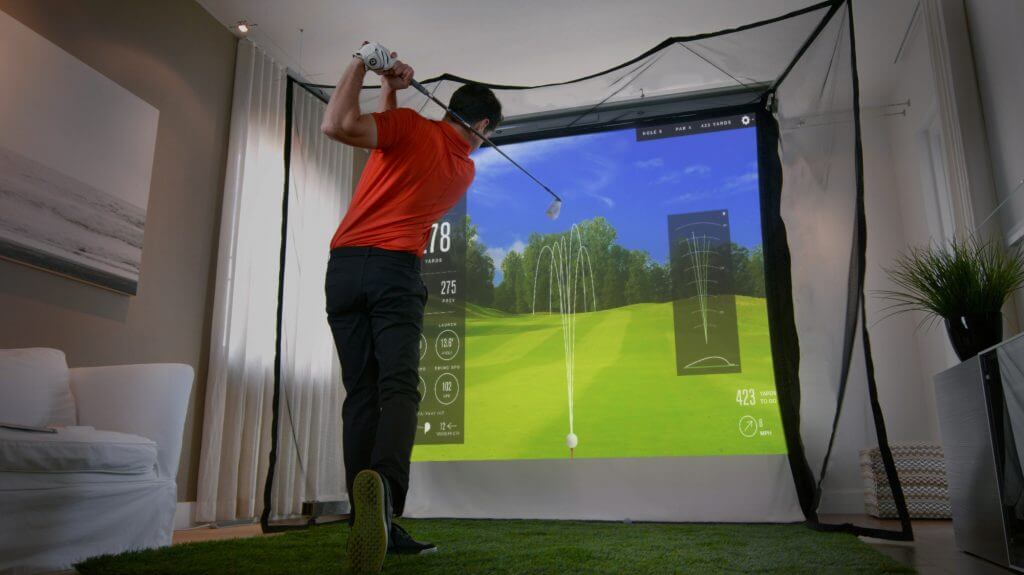
Impact Screens
Your impact screen is what delivers the razor-sharp image quality as per your simulator software, while offering durable resistance to strikes. The tension and material composition influence both the playing experience and the longevity of your installation.
High-definition screens constructed from specialised impact-resistant fabrics offer the best balance. They absorb ball shots effectively, reduce noise, and contribute to an immersive experience. Their physical properties (weave density and surface treatment) determine how crystal-clear the projected images are, which is handy if playing in well-lit facilities or during the daytime.
Screen geometry is more important than many people realise. Curved screens can enhance the sense of immersion, though they require careful projector alignment. Flat screens, conversely, are easier to set up, but may show slight image distortion at the edges with standard projectors. The choice boils down to balancing both realism and simplicity during installation.
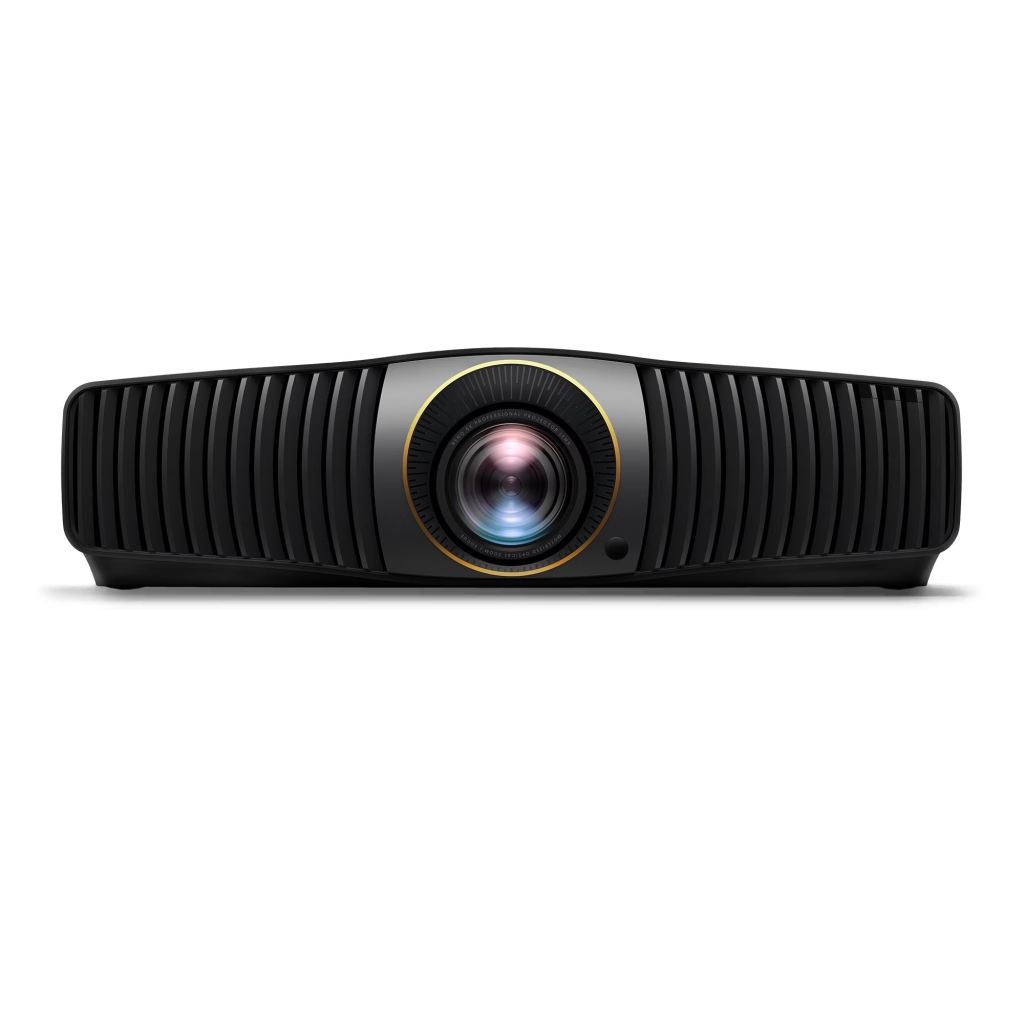
Projectors
The projector is what’s responsible for bringing life and realism to your simulator setup. It should be considered carefully, with close attention paid to brightness (lumens) and resolution in respect of room lighting. The salient point is that the darker the room, the fewer lumens needed to achieve proper resolution.
Short-throw projectors can be mounted closer to the screen without risking interference with your swing. Look for models offering at least 3,000 lumens for rooms with ambient light, or 2,500 lumens for dedicated spaces with controlled lighting. Resolution is equally important, but perhaps not as much as modern marketing would suggest. Full HD (1920×1080) provides perfectly adequate detail for golf simulation, and going up to 4K, while undoubtedly better quality, does add up cost-wise. For many players, HD projectors more than suffice, and with sufficient brightness, contrast ratio and lamp life, their experience is essentially perfect.
Professional Hitting Mats
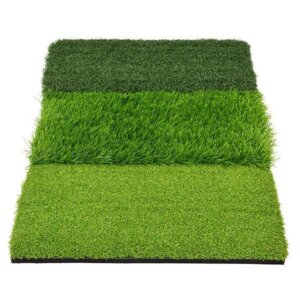
Your golf practice mat represents the physical interface between your swing and the technology that’s analysing every aspect of it. While simple on the surface, quality matters substantially; poor-quality mats lead to joint strain, inconsistent haptic feedback and discomfort. Premium hitting mats, on the flip side, incorporate multi-layer construction with shock-absorbing underlays that protect your joints during golf training sessions or drills. The top surface should allow your club to interact naturally, permitting slight divot action without snagging or excessive resistance. This realistic interaction helps maintain proper swing mechanics rather than forcing you to adjust your position unnaturally or make unnecessary modifications, that transfer poorly to the course.
Mats that allow you to vary angles and stance positions enable more comprehensive practice, particularly valuable for working on specific shot shapes or swing mobility issues. The ability to practice from various positions, rather than perpetually hitting from a perfectly flat and even surface, develops adaptability that translates to better on-course performance.
Tee Turf and Practice Surfaces
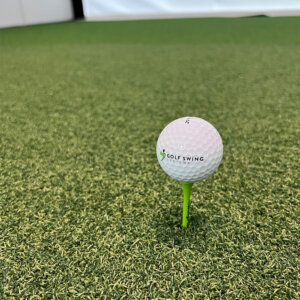
Beyond the hitting mat, dedicated tee turf and practice surfaces complete a professional home golf simulator setup. These components provide realistic surfaces for different shot types, from driving to putting, within the same system. The ability to work on multiple aspects of your game without changing locations or equipment gives you plenty of training potential and allows you to maximise your time.
Quality tee turf systems offer realistic ball support for drives whilst protecting your clubs from damage. They should accommodate real tees at various heights, enabling you to replicate actual driving conditions rather than compromising with pre-set tee positions that don’t change.
Integrated Solutions: Complete Simulator Packages
Whilst understanding individual components helps you make informed decisions, many people benefit from integrated packages that ensure compatibility and optimal performance.
Golf Swing Systems offers several golf simulator bundles designed around proven component combinations, including (but not limited to):
- The SkyTrak Full System – an excellent entry point for enthusiastic and serious golfers, combining accurate photometric launch monitor technology with all essential components in a package that fits most residential spaces.
- The Foresight GC3 bundle – offering exceptional accuracy with an innovative camera-based system that excels in most indoor home installations.
- The TrackMan Full Simulator Setup – the go-to choice for those who demand the best golf simulator setup, and one that is widely used by touring professionals and elite training facilities worldwide. TrackMan represents the gold standard in launch monitor technology, so if you’re serious, it’s worth the investment in premium golf training and simulator experiences.
Planning to Ensure a Successful Simulator Installation
Creating an effective home golf studio extends beyond simply acquiring the above equipment. Training effectively knows no bounds, but we all have limits to consider. Remember the following key factors:
- Ceiling height and room dimensions
- Floor stability and protection
- Lighting control
- Climate management
- Access to sufficient electrical infrastructure
- Network connectivity and strength
- Acoustic considerations
These factors all directly influence comfort, experience and value for money. What’s more, the variety of available golf simulator systems can feel overwhelming, which is precisely why Golf Swing Systems has developed its consultative approach to simulator setup and installation. Rather than pushing particular products or configurations, our team focuses on understanding your specific requirements: available space, primary users, skill levels, practice goals, and budgetary parameters.
Getting Started with Your Home Golf Studio
Creating a complete home golf studio represents a significant commitment, both financially and in terms of space and time. However, for those serious about improving their game or adding a premium amenity to their home, the ends well and truly justify the means. The appeal of having an accessible practice opportunity all year round, in-depth performance data, and best-in-class equipment is hard to ignore.
These essential pieces of the proverbial puzzle work together to create a system that is designed to hone your skills and deliver the best return for you as a committed golfer, whatever your skill level. Quality does matter, but not every installation requires the best specifications in every category. The best decision you can make is to optimise your budget across components based on your priorities and constraints.
Whether you’re considering an entry-level package or a premium professional setup, starting with expert guidance helps you avoid costly mistakes whilst ensuring your installation meets your expectations. Golf Swing Systems has helped hundreds of clients navigate these decisions, and we’re here to do the same for you. Contact our team today to discuss your aims and explore the range of simulators, packages, and training equipment that will support your exact needs. We’ll discuss the best way to configure a system that delivers true value for your specific situation, and it all starts with a transparent conversation.


