




What Metrics Do You Need to Track with Golf Launch Monitors?

When it comes to ascertaining how players analyse and improve their swings, modern golf launch monitors have, pardon the pun, changed the game entirely.
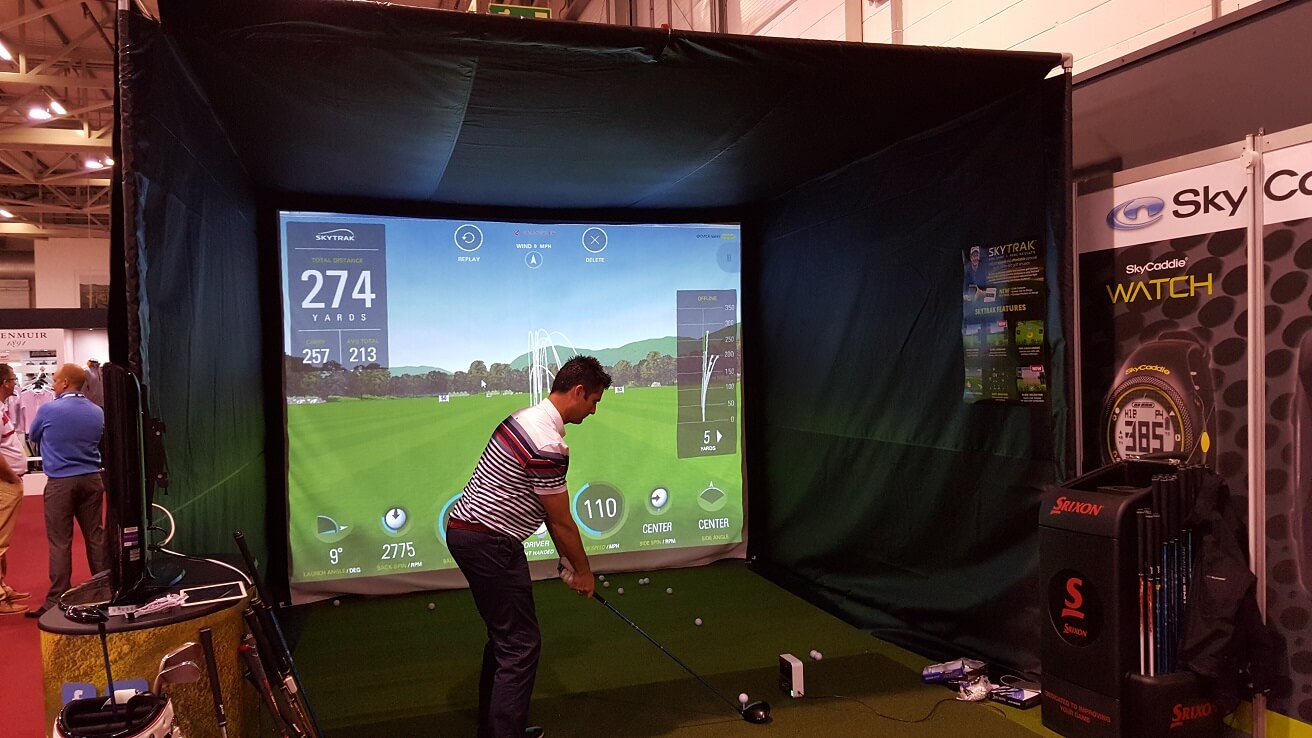
Launch monitor technology was, at one point, reserved for tour professionals and elite coaching facilities. However, now it is widely accessible for home simulator setups and practice environments. By capturing precise data about club delivery, ball flight and impact conditions, launch monitors allow golfers to make data-driven, quantifiable improvements to their game, instead of relying solely on guesswork.
That said, if you’re new to golf simulator setups and launch monitors themselves, the numbers on the screen may not make a huge amount of sense, right off the bat. With so many metrics to explore and understand, it can quickly feel overwhelming for golfers serious about improving their game. Understanding the numbers that matter the most can help you interpret the data more meaningfully, and turn those insights into tangible swing improvements.
Below is a concise guide to the most important launch monitor metrics and how they influence performance.
Ball Speed
Ball speed refers to how fast the golf ball leaves the clubface immediately after it’s struck. It is one of the most critical indicators of shot performance because it directly influences the potential distance it can travel.
Ball speed is affected by several factors including:
- Clubhead speed
- Strike quality (centre vs off-centre)
- Clubface efficiency
A higher ball speed generally translates into greater carry distance, assuming launch and spin are positively placed. Improving strike quality and centre-face contact is often the fastest way to increase ball speed.
Clubhead Speed
Clubhead speed measures how fast the club is travelling at impact. This metric is particularly useful for identifying potential opportunities to make the ball travel further upon impact.
However, faster isn’t always better if efficiency drops.
Launch monitors allow golfers to compare clubhead speed with ball speed to evaluate how effectively energy is transferred to the ball.
Players often use this metric to assess elements such as:
- Swing mechanics
- Equipment suitability
- Potential physical training improvements
Smash Factor
Smash factor is the ratio between ball speed and clubhead speed. It indicates how efficiently the club transfers energy to the ball.
For example:
- Driver smash factor: typically around 1.45–1.50
- Irons: usually lower due to loft
A low smash factor often indicates that the strike was off-centre, or that the club didn’t make full impact with the ball. Monitoring this metric can help golfers focus on improving contact consistency rather than simply swinging harder and faster.
Launch Angle
The launch angle describes the initial vertical angle at which the ball leaves the clubface, relative to the ground.
Improving your golf launch angle is essential for maximising distance and control. If the launch angle is too low, shots may lack carry distance. Too high, and the ball may balloon and lose forward momentum.
Launch angle optimisation depends on factors such as club type, swing mechanics, and spin rate. This is one of the many benefits of launch monitors; this type of intricate data isn’t that easily accessible.
Spin Rate
Spin rate measures the amount of backspin the ball has after impact, typically recorded in revolutions per minute (RPM). Spin has a profound influence on ball flight and overall success:
- Too much spin can cause shots to climb and lose distance
- Too little spin can make shots fall out of the air quickly
Different golf clubs possess different ideal spin ranges. For instance, drivers typically benefit from a slightly lower spin rate for greater distance coverage, while irons require more spin for better overall control and stopping power on greens.
Tracking spin data can help golfers identify swing faults or equipment mismatches.
Carry Distance
Carry distance measures how far the ball travels through the air before landing.
Many golfers aim to clear as much distance as possible on shot #1, and so that often tends to be their sole metric of focus during play. However, carry distance is far more useful during practice sessions; it provides a consistent metric unaffected by ground conditions such as slope, firmness or evenness.
Club Path and Face Angle
Advanced golf launch monitors can also track detailed club delivery metrics, including:
- Club path – the direction the club is travelling relative to the target line
- Face angle – where the clubface is pointing at impact
These numbers are especially useful when diagnosing shot shapes such as fades, draws, slices or hooks.
For instance:
- A path travelling left with an open face often produces a slice.
- A path travelling right with a closed face can create a hook.
Understanding these types of shot mechanics enables golfers and coaches to identify the root cause of ball flight issues rather than simply reacting to the outcome and trialling the same thing over and over again with no tangible strategy.
Turning Data into Real Improvement
Launch monitor numbers are only valuable when they’re interpreted correctly and used within a structured practice routine and golf training setup. Focusing on a few key metrics at a time is typically more effective than trying to change everything at once.
Golfers looking to integrate launch monitor technology into their practice environment can explore a range of professional-grade systems in the our launch monitor shop.
For deeper insights into building a practice setup, the team also shares expert guidance within their golf simulator advice hub, including technical comparisons such as whether radar or camera launch monitor technology is more effective, and explanations of the differences between a golf simulator and a launch monitor.
We are constantly expanding our resources with more up-to-date, relevant and topical information to help you make informed decisions and understand how to get the most out of your setup.
Choosing the Right Launch Monitor
Not all launch monitors track the same metrics simultaneously, and the ideal system depends on your playing level, training goals and installation environment. Home simulators, indoor practice setups and professional coaching studios may each benefit from different technologies, routines and programmes.
If you’re considering investing in golf launch monitors, the experts at Golf Swing Systems can help you select the right solution. Our team works with golfers, coaches and commercial venues to recommend systems tailored to your playing style, proficiency and available space, ensuring you get accurate data that genuinely supports your long-term improvement.
Contact Golf Swing Systems today for a no-obligation consultation to see how we can help you find that technology to help you track the metrics that matter most to you.


